
Heartworm disease is a potentially life-threatening condition in dogs, and a single bite from an infected mosquito is all it takes to spread it. Unfortunately, most dogs do not show symptoms of heartworm infection until the disease has progressed. Understanding the signs, treatment options, and prevention strategies can help you recognise potential infection and reduce your dog’s risk.
What Is Heartworm Disease in Dogs?
Heartworm disease is caused by a parasite called Dirofilaria immitis. Mosquitoes can carry microfilariae, an early larval stage of this parasite. These microfilariae develop inside the mosquito into infective larvae (immature worms), which can then be transmitted to a dog when the mosquito feeds.
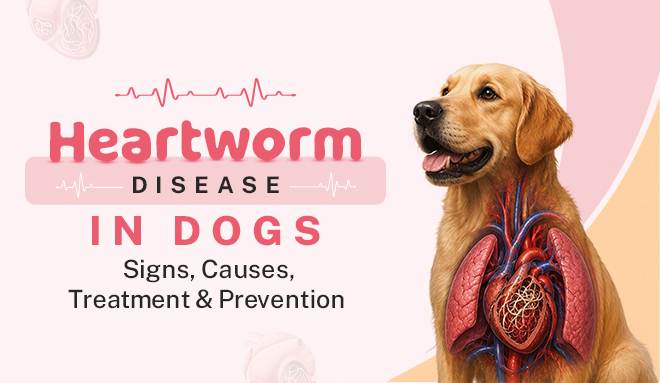
Once inside a dog, immature worms eventually develop into adults that live mainly in the pulmonary arteries and associated blood vessels. In severe infections, adult worms can also enter the heart and lungs.
Adult heartworms are long, thread-like worms that can affect the blood flow and cause ongoing damage to the lungs and cardiovascular system. If left untreated, heartworm disease can also lead to heart failure and death in dogs.
What Are the Symptoms of Heartworm Disease in Dogs?
In most cases, early heartworm infection is surprisingly quiet. As the disease progresses, an infected dog may show the following symptoms:
- A persistent, mild cough
- Difficulty in breathing
- Reluctance to exercise
- Reduced appetite
- Lethargy and fatigue
- Weight loss
- Abdominal swelling
- Pale gums
In more advanced cases, dogs may show symptoms like heavy panting or collapse. Therefore, regular testing for heartworms in dogs plays an important role in detecting the infection at an early stage. If you notice any of these signs, seek veterinary attention promptly.
What Causes Heartworms in Dogs?
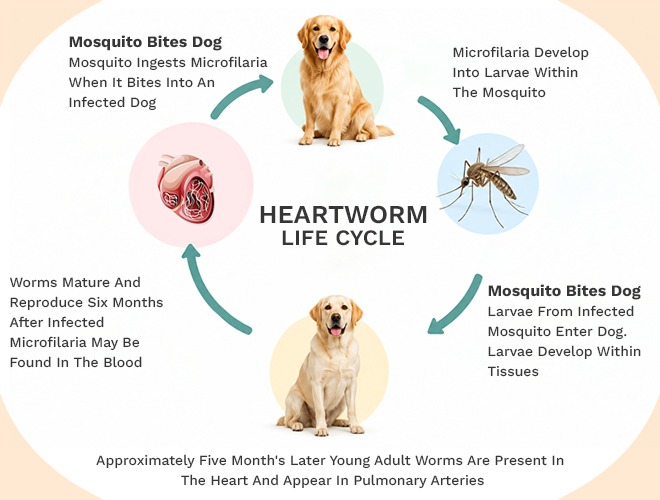
Mosquitoes infected with Dirofilaria immitis can transmit canine heartworm disease. The larvae gradually mature inside the dog, developing into adult worms within six to nine months of infection. When the heartworms mature, they begin producing microfilariae, which circulate in the dog’s bloodstream.
Now, when a healthy mosquito bites this dog, it can ingest microfilariae along with the dog’s blood. Microfilariae mature into larvae inside the mosquito (within 10-14 days under suitable conditions), continuing the heartworm lifecycle. This mosquito can potentially infect healthy dogs by transmitting heartworm larvae.
Heartworm disease cannot be directly transmitted from an infected dog to a healthy dog, but mosquitoes can act as carriers of infective heartworm larvae. Adult heartworms can live for several years, typically residing in the pulmonary arteries and other blood vessels associated with the heart and lungs.
What Is the Treatment for Heartworm Disease?
The heartworm disease treatment isn’t as straightforward as giving a dewormer tablet to your dog. A veterinarian will design a treatment plan based on the severity of the disease and worm load to stabilise the dog’s condition.
The treatment plan mainly includes medications like melarsomine to kill adult heartworms, heartworm preventives to eliminate larval stages of heartworms, and in certain cases, steroids to manage inflammation caused by the worms. Because heartworm-positive dogs can develop reactions to some treatments, a heartworm preventive dose should be administered only under veterinary guidance.
Strict exercise restriction is also an important part of heartworm treatment because complications can occur as worms die and the body responds to them. In some cases, surgical removal of heartworms may also be required.
How to Prevent Heartworm Disease in Dogs?
Prevention is much easier, safer, and more economical than treating an already established infection. The following will help you reduce the risk of heartworm disease in dogs:
Heartworm prevention treatment
Veterinarians across the globe recommend year-round heartworm prevention for dogs using a vet-recommended prevention treatment. These treatments are available in oral and topical formats, such as Heartgard Plus Chewable or Revolution for Dogs. Some treatments, like NexGard Spectra, also offer additional protection against fleas, ticks, and intestinal worms.
Annual heartworm testing
Annual heartworm testing helps detect an infection at an early stage. You can start a prevention program in puppies without waiting for a heartworm test, but they need appropriately timed follow-up testing as they grow. Dogs that are old enough to have been exposed to heartworms should be tested according to veterinary recommendations before starting or restarting prevention. This is important because dogs with an established infection, particularly those with circulating microfilariae, may be at risk of adverse reactions to certain treatments.
Mosquito prevention & treatment
As mosquitoes are the culprit of heartworm disease, limiting your dog’s exposure to them may help reduce the risk. Use a pet-safe mosquito repellent spray and do not leave standing water around the house, where mosquitoes can breed. But keep in mind that preventing mosquitoes in your environment should never replace a vet-recommended heartworm prevention treatment.
The Bottom Line
Heartworm disease is a serious condition that can affect dogs irrespective of their breed, age, size, and whether they spend most of their time indoors or outdoors. Following a regular heartworm preventive routine and consistent veterinary monitoring can help you protect your dog from a heartworm infection. If you suspect your dog may be showing any signs of heartworm disease, contact your veterinarian immediately. Early detection makes heartworm treatment less complicated and reduces the risk involved.