
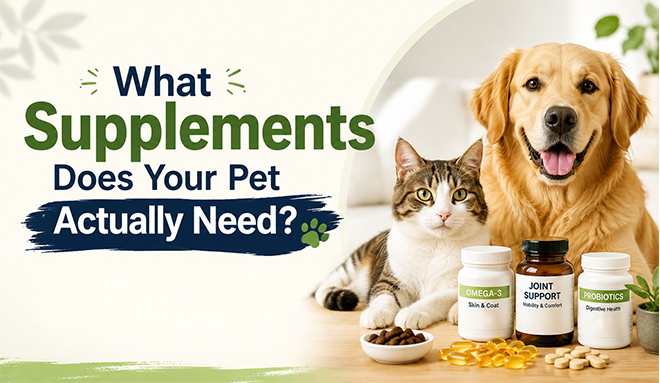
At DiscountPetCare, you will discover a variety of pet supplements for a wide range of health concerns. There are supplements for your pet’s joints, digestion, skin, coat, immunity, teeth, anxiety, behaviour, and more from different pet wellness brands. While many of these options might make sense to you, and you may feel a need to include them in your pet’s routine, it is important to pause and ask, “What supplements does my pet actually need?”
The short answer is it depends. Healthy dogs and cats eating a complete and balanced diet generally do not need routine vitamin or mineral supplements. Dietary supplements may be most useful when there’s a specific health goal, a specific nutritional gap, a life-stage consideration, or a recommendation from your veterinarian.
In this blog, we have listed some supplements your dog or cat may benefit from, when you should consider using them, and for how long you should continue using them for your pet.
Top Options in the Pet Health Supplements Range
1. Joint Supplements
Joint issues are common in pets due to various reasons and can affect mobility. So, joint supplements may be worth discussing if your pet is ageing, has osteoarthritis, or is showing signs like stiffness, reduced activity, or difficulty getting up. Nutritional joint support is usually a long-term strategy that some pets (especially those that are prone to joint problems) might need from an early age. Your veterinarian can advise how long your pet needs to continue using a joint supplement and when to reassess the need.
Common types: Glucosamine, Chondroitin, Green Lipped Mussels, MSM, Collagen, and Curcumin.
2. Digestive Supplements
A healthy gut is a key to a healthy body. Digestive health supplements like probiotics and prebiotics may help support digestive health when a pet experiences changes in the normal digestive balance, especially after antibiotics, stress, illness, or a sudden diet change. Some pets may benefit from gut health supplements during a short-term digestive upset, while pets with chronic digestion problems may require longer support under veterinary guidance.
Common types: Probiotics, Prebiotics, Postbiotics, Digestive Enzymes, Herbal Supplements, Fibre Blends, and Psyllium Husk.
3. Skin & Coat Supplements
If your pet is experiencing dry skin, excessive shedding, or a dull coat, omega-3s and other targeted nutrients present in skin and coat supplements may be helpful. But persistent itching, hair loss, or recurrent skin infections deserve a veterinary check rather than simply adding a supplement. If you decide to give a skin and coat supplement a try, remember that it may take up to several weeks before you observe a noticeable improvement.
Common types: Algae Oil, Fish Oil, Evening Primrose Oil, Vitamin E, Biotin, Collagen, Linoleic Acid, Omega Fatty Acids, Zinc, and Herbal Extracts.
4. Omega Supplements
Omega-3 fatty acids, particularly EPA and DHA, play an important role in maintaining your pet’s overall health. Omega supplements for pets may support skin and coat health and heart health when included as a part of an appropriate diet. They may also help support a healthy inflammatory response. Just remember, supplements aren’t necessarily better. Omega fatty acid supplements still add calories and may cause side effects when used excessively.
Common types: Fish Oil, Krill Oil, Flaxseed Oil, and Green Lipped Mussel Oil.
5. Immune Support Supplements
“Immune boosting” is a popular supplement claim, but a healthy pet doesn’t necessarily need an immune supplement. Good nutrition, appropriate vaccinations, parasite prevention, exercise, and routine veterinary care are the real foundation of your pet’s health. Consider an immunity support supplement only when there is a specific reason and your veterinarian recommends it to support or strengthen the dog’s or cat’s immune system. They may be especially considered during recovery after an illness or surgery, or for senior pets, depending on their individual needs and veterinary advice.
Common types: Probiotics, Colostrum, Herbal Extracts, Antioxidants, and Omega Oils.
6. Dental Supplements
Dental chews, specially formulated dental diets, and certain oral health supplements can complement brushing and professional dental care. They are formulated with ingredients intended to support your pet’s dental hygiene. Dental health supplements may be useful for some pets, but they should not be treated as a replacement for brushing.
Common types: Textured Treats, Seaweeds, Probiotics, and Enzymatic Chews.
7. Calming Supplements
Stress and anxiety can occur due to many reasons in pets, such as changes in environment, loud noises, separation, ageing, or certain phobias. Calming supplements may help some pets cope with stress and support relaxation. However, supplements should not be considered a substitute for addressing the underlying cause of anxiety or seeking appropriate help for behavioural problems.
Common types: L-Theanine, L-Tryptophan, Magnesium, Camomile, Valerian, and Alpha-Casozepine.
8.Vitamin & Mineral Supplements
This is where pet parents should be particularly careful. If your dog or cat eats a complete and balanced diet appropriate for their life stage, adding a multivitamin usually isn’t necessary, and excessive amounts of certain nutrients can be harmful. However, if they are diagnosed with deficiencies or if your veterinarian suggests adding them to the pet’s diet to support certain health conditions, vitamin and mineral supplements may be beneficial.
Common types: A mix of various vitamins and minerals.
Common Questions When Buying a Pet Health Supplement
Do all pets need supplements?
No. A healthy pet eating a complete and balanced diet will generally get the nutrients it needs from food. Growing pets, older pets, or pets with health issues may require targeted nutritional support from health supplements. Nutritional supplements should address a specific nutritional need rather than become an unnecessary part of every pet’s daily routine.
Which supplements does my pet need?
Your veterinarian may recommend one for a specific concern such as joint disease, digestive issues, nutritional deficiencies, or certain life-stage needs. The goal is generally targeted nutritional support rather than simply adding more nutrients.
How can I choose the right supplement for my pet?
Choose a supplement based on your pet’s species, age, weight, diet, health history, and the reason you’re considering a supplement. Look for clearly listed ingredients and dosing instructions. And always check with your vet to ensure you have chosen the right product for your pet.
To conclude,
Your pet probably doesn’t need a shelf full of supplements. Focus on providing a complete, balanced diet, regular veterinary care, appropriate exercise, and preventive healthcare. Then, if there’s a specific need, choose a targeted pet health supplement with your veterinarian’s guidance.