

There is no denying that the food we eat has a direct impact on our energy and overall health. It is relatable for our furry companions as well. For that, your vet may suggest you go for a prescription or therapeutic diet that focuses on your pet’s specific needs and health condition. In this blog, we are going to explore two of the well-known brands: Royal Canin vs. Hill’s Prescription Diet. Both are vet-recommended, and so we will see a side-by-side comparison and help you choose the right one for your pet.
What Makes Prescription Diets Different?
Prescription diets are specially formulated nutritional formulas that meet the specific health needs of your pet. You might think you can buy any XYZ food that has similar claims in improving the health of your dog or cat, and it may also cost less. There’s a big difference, actually.
Prescription diets, also known as therapeutic diets, are clinically tested and developed by a team of expert nutritionists and veterinarians. Prescription formula is customised to support conditions like weight management, skin care, urinary care, digestive care, or allergies in pets.
Each diet for this specific condition is carefully balanced with the appropriate levels of protein, fat, fibre, vitamins, and minerals to support your pet’s body. Both Royal Canin and Hill’s Prescription Diet serve the same purpose, but their approaches differ significantly.
Brand Philosophy and Approach
Royal Canin follows a nutrition-based approach, like a highly precise ratio of ingredients needed for the specific nutritional needs of your pet. Most of the diets have multiple variations for the same diet needs. The customised formula typically depends on your pet’s breed, size, age, and lifestyle. It also offers recipes to support specific health conditions.
Hill’s Prescription Diet heavily focuses on clinical studies and evidence in crafting diets that help support different health conditions. These evidence-based formulations may help improve and prolong the quality of your pet’s life.
Comparing Prescription Diet Ranges
Both brands offer an extensive range of prescription diets. Let’s look into the depth and breadth of both brands’ therapeutic range.
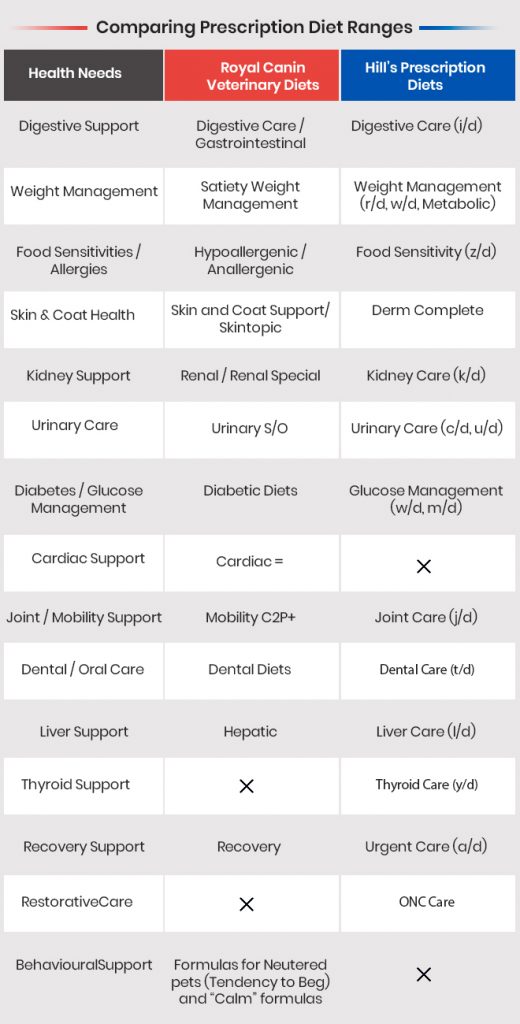
Both brands address core therapeutic needs, as shown in the table.
One of the key differentiators is that Royal Canin Prescription Food also focuses on behavioural nutrition (e.g., satiety + begging control + calm) and offers multiple palatability options for each condition of your pet. Comparatively, Hill’s offers a broader clinical spectrum, including liver, thyroid, restorative care, and environmental allergies.
Ingredient Strategy
Your pet’s healthy digestion, strong bones, and a beautiful coat are all results of a carefully selected combination of ingredients and nutrients.
- Hill’s uses clinically tested ingredients with a controlled nutrient profile (e.g., ActiveBiome+ formula for digestive support) that deliver therapeutic outcomes for pets of every age, size, and variety of needs.
- Royal Canin focuses on functional ingredient combinations (e.g., hydrolysed protein for severe allergies) that make a huge difference to your pet’s life and health.
Palatability: Will Your Pet Actually Eat It?
We may have covered a wide range of prescription foods. Now, the question is, will your pet take the food voluntarily? Most pet parents know the feeling of giving pet food, especially if their pet is a picky eater. In other cases, sick pets often lose their appetite. The smell and taste of the food increase palatability for pets, which encourages repeated consumption of the food. Even the most advanced formula fails if your pet doesn’t want to eat it.
Both Royal Canin and Hill’s Prescription Diet are highly regarded for palatability. Royal Canin’s extensive range of veterinary food often strongly focuses on aroma and texture to entice finicky eaters. Meanwhile, Hill’s aims for consistent acceptance through controlled formulation and testing.
How a brand formulate its diet?
Pets respond differently to protein source, fat levels, or the texture of the food. Royal Canin can be useful when pets need alternative formulations.
For Hill’s Prescription Diet, every flavour profile they create undergoes a series of taste tests with dogs and cats to see what they prefer. Hill’s diets are backed by extensive feeding trials that often help with the predictable response pattern. So, it will be easier to make a decision on what your pet may like and what not.
Customisation
Both brands offer highly customised food options, even the shape, texture, size, or aroma, which are customised for your pet’s needs and preferences.
Royal Canin has multiple variants for the same needs, which may give you more options to choose from. In contrast, Hill’s has more streamlined therapeutic diets that make your selection simple.
Which Brand Might Suit Your Pet?
You may consider…
Royal Canin, if your pet needs,
- Multiple variants for the same needs
- Behavioural support diet(satiety, calming)
Hill’s Prescription Diet, if your pet needs,
- Broader health condition-specific coverage
- Streamlined clinical option
Final Thoughts
From the many pet food brands, Royal Canin and Hill’s Prescription Diet are among the most commonly recommended by veterinary professionals. Both are scientifically backed and offer customised options to support your pet’s general and specific health needs. At the end, the suitable diet is the one that helps your pet feel like themselves again. You can explore the best prescription pet food range on DiscountPetCare with amazing discounts. Make sure you talk to your veterinarian before giving prescription food to your pet.