Walk into any pet store or browse online for five minutes and you’ll see: walls of toys promising happier pets, sharper minds, cleaner teeth, and endless fun. However, every experienced pet parent learns this the hard way: not every toy is a good one, and definitely not every toy is right for your dog or cat. Some toys get ignored after five minutes. Others don’t last a single afternoon. And a few can actually be unsafe if they’re not suited to your pet’s size, chewing style, or personality.
That’s why learning how to choose the right toys for dogs and cats matters more than grabbing whatever looks cute. This pet toy buying guide breaks down what actually makes a toy worth buying, how dogs and cats use toys differently, and which types of toys suit the different needs of your pet.
Why Should You Choose the Right Pet Toys?
Toys aren’t just entertainment. For pets, the right toys support mental stimulation, physical exercise, stress relief, and even dental health. The wrong toys, on the other hand, can lead to frustration, boredom, destructive behaviour, or safety risks like choking and broken teeth.
Dogs and cats play, learn, and interact with toys in their own unique ways. Understanding those differences is the first step towards choosing toys they’ll actually enjoy and safely use.
How to Choose the Right Toys for Dogs and Cats
The right toy fits into your pet’s everyday life, how they move, how they think, and how they spend their time when you’re not around. Before buying anything, think about these basics:
Size and Strength
A toy should always match your pet’s size and jaw strength. Too small, and it becomes a choking hazard. Too hard, and it can damage teeth, especially for dogs that chew aggressively.
Play Style
- Is your dog a power chewer or more of a gentle gnawer?
- Does your cat love chasing feathers or stalking laser dots?
Toys that match natural behaviour get used more often.
Safety First
Always look for safe dog toys and safe cat toys made from non-toxic materials, with no small parts that can be swallowed. Supervision is especially important with new toys.
Match Toys to Your Pet’s Age
Puppies and kittens need softer toys for developing teeth. Adult pets often benefit from enrichment and challenge-based toys. Senior pets may prefer gentler play with less impact, especially if joints or teeth are sensitive.
Your Pet’s Daily Lifestyle
If your pet is left alone for long hours, interactive or puzzle toys can help reduce boredom and anxiety. On the other hand, very active pets often need toys that let them burn off energy safely. A toy that suits a couch-loving cat won’t work for a high-energy dog, and vice versa.
Rotation Over Quantity
Pets get bored easily. Rotating toys every few days keeps things interesting without constantly buying new ones. A combination of comfort toys, interactive options, and play-focused toys usually works far better than leaving everything out all the time.
Best Dog Toys: What to Look For
Dogs tend to play with their whole bodies. They chew, tug, chase, shake, and carry toys around. Many dogs use toys as an outlet to spend energy, relieve anxiety, or satisfy instinctive behaviours like chewing and hunting. Common dog toy types include:
Chew Toys
Some dogs chew because they’re bored. Some chew because it helps them relax. Others chew because… well, they’re dogs. A good chew toy gives them something safe to work on instead of your shoes, furniture, or door frames. The key is choosing something tough enough to last, but not so hard that it risks their teeth. Some popular toys for your ardent chewer include:
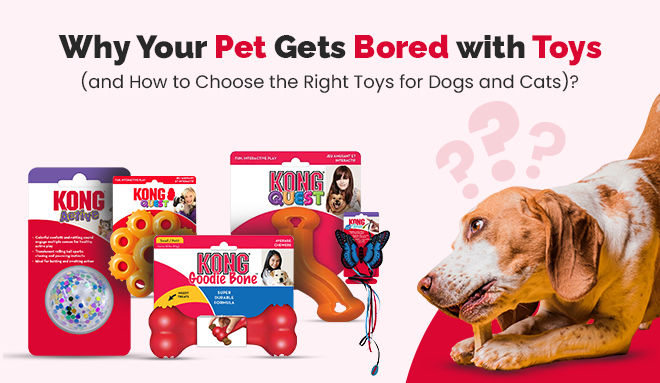
- KONG Goodie Bone Rubber Toy
- KONG CoreStrength Toy
Interactive Toys
These are great for dogs that get restless, anxious, or destructive when they’re under-stimulated. A few minutes of problem-solving can tire them out as much as a walk. Keep your dog engaged with these interactive toys:
- KONG Quest Treat Dispensing Toy
- Spunky Pup Clean Earth Octopus
Tug and Fetch Toys
These are perfect for burning energy, building confidence, and strengthening the bond between you and your dog. These options can be perfect for your energetic pup:
- KONG Wubba Tug Toy
- KONG Squeeze Crackle Squeaker Fetch Toy
Durability matters, but so does flexibility. A toy that’s too hard can be just as problematic as one that falls apart too quickly.
Best Cat Toys: What Cats Actually Enjoy
Cats don’t play the same way dogs do. They want short bursts, fast movement, and something that feels unpredictable. Key categories include:
Interactive Toys
The best interactive toys trigger that hunting response, such as stalking, pouncing, and chasing, even if it’s just for a few minutes at a time. Get any of these for your kitty to satisfy their natural instinct:
- KONG Teaser Butterfly Crackle Toy
- KONG Purrsuit Whirlwind Toy
Solo Play Toys for Independent Cats
Not every cat wants you involved in playtime. Some prefer toys they can come back to on their own terms. These are great for cats left alone during the day. Some toy options for your loner include:
- KONG Active Toy
- KONG Wobbler Treat Dispenser Toy
Mental Stimulation Toys
Cats may sleep a lot, but their brains still need work. Mental stimulation toys can give them something to think about, problem-solving, pawing, and sniffing, which is especially important for indoor cats that don’t get outdoor exposure. Keep your cat occupied with these fun toys:
- KONG Connects with Catnip Toy
- KONG Crackles Catnip Toy
Always avoid toys with string or ribbons unless you’re supervising the play.
Safe Toys for Pets
Even well-meaning toys can be risky if they’re poorly designed or unsuitable.
Avoid:
- Toys that splinter, crack, or shed easily
- Very hard materials that don’t flex at all
- Toys with small parts that can be swallowed
- Toys with strong chemical smells
Regularly inspect toys and discard anything damaged. No toy lasts forever, and that’s okay.
Final Thoughts
There’s no such thing as a perfect toy. Only the one your pet actually enjoys is perfect for them. Some dogs will ignore expensive toys and obsess over the simplest chew. Some cats will turn their nose up at flashy gadgets and go crazy for a feather on a string. The trick is paying attention. How does your pet play? Do they chew hard, stalk quietly, or get bored quickly? Once you notice those patterns, choosing toys becomes much easier and far less wasteful.
Good toys keep your pet calmer, more engaged, and happier in their daily routine. And honestly, when you find one they love, it feels like a small win for both of you.