
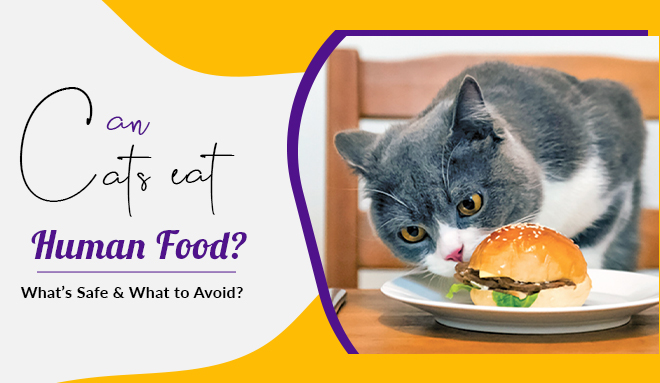
There’s a universal moment every cat parent eventually experiences: you’re in the kitchen, maybe pulling apart a roast chicken or slicing fruit, and suddenly there they are, eyes locked on your hands, tail flicking, very interested in what you’re eating, and you find yourself wondering, “Surely a tiny bite won’t hurt… right?”
Sometimes that’s true. Other times, it really isn’t. Maybe it’s a piece of chicken from your plate, a crumb of cheese, or a tempting lick of peanut butter you caught them trying to swipe. It’s instinctive, right? We love our cats and want to share tasty treats with them.
Cats are curious eaters, but their bodies don’t work like ours. In this guide, we’ll walk you through what human foods are safe for cats, which should be offered with caution (or modified), and which foods you should never give to a cat.
Why can’t cats eat as humans do?
Cats aren’t small dogs, and they definitely are not tiny humans. They’re obligate carnivores, which means their bodies are built to get nutrition almost entirely from animal protein.
In practical terms, that means:
- They don’t digest plant foods efficiently.
- They rely on nutrients like taurine that are found in high amounts in meat.
- Their livers process certain substances very differently.
So even if a food smells amazing to your cat, it doesn’t mean their system knows what to do with it.
Human Foods That Are Usually Safe for Cats (In Small Amounts)
There are some foods you can safely share, but preparation matters more than the food itself.
Cooked Chicken or Turkey (Plain Only)
This is one of the safest options and probably the most commonly shared. Plain, cooked poultry is close to what cats naturally eat.
If you wouldn’t eat it without seasoning because it tastes boring, that’s perfect for your cat. No skin. No bones. No salt, garlic or sauces.
Cooked Fish (Occasional Treat)
A little cooked salmon or tuna can be fine now and then. Cats love the smell, but fish shouldn’t become a regular thing. Too much can throw off their nutritional balance.
Always cooked. Always deboned.
Fully Cooked Eggs
Eggs are surprisingly nutritious for cats when cooked properly. Scrambled or boiled eggs without oil, butter, or seasoning are fine in small amounts.
Raw eggs, on the other hand, are a hard NO.
Plain Pumpkin or Sweet Potato
This one surprises people, but plain cooked pumpkin is often recommended by vets for mild digestive issues. A teaspoon mixed into food can help with constipation or loose stools.
Make sure it’s not spiced, sweetened, or from a pie filling.
Small Amounts of Certain Fruits
Some cats enjoy tiny pieces of watermelon, bananas, strawberries or blueberries. These don’t offer much nutritional value, but they’re generally safe if your cat tolerates them.
Give them as a “curiosity snack”, not as a treat bowl.
Foods That Should Never Be Shared With Cats
This is where things get serious. Some foods are dangerous even in small quantities.
Onions, Garlic, and Chives
These damage red blood cells and can cause anaemia. Cooked, powdered or raw, it doesn’t matter. They’re all unsafe. This includes foods containing them, like gravies or seasoned meats.
Chocolate, Coffee, and Caffeine
Cats can’t process caffeine or chocolate compounds properly. Even a small amount can cause tremors, heart issues, or worse. No chocolate licks. No coffee foam. Ever.
Grapes and Raisins
While reactions in cats are less documented than in dogs, vets recommend avoiding them entirely. It can cause kidney failure. The risk isn’t worth it.
Alcohol and Yeast Dough
Alcohol is toxic to cats, full stop. Yeast dough can expand in the stomach and produce alcohol internally, which is just as dangerous.
Xylitol (Artificial Sweetener)
Found in sugar-free gums, some peanut butters, and baked goods. Always check labels before letting your cat lick anything.
Dairy Products
Most adult cats are lactose intolerant. Even small amounts can cause diarrhoea or an upset stomach.
A More Practical Way to Share Safe Human Food
Your cat might beg when you’re chewing chicken, nibbling ham, or spooning yoghurt, and some of those things can be okay. But:
- Treat human food as just that: occasional treats, not meals.
- Always remove bones, skin, seasoning, sauces, and fats.
- Introduce new foods slowly so you can watch for reactions.
When you’re unsure about what to give and what not to give your cat, here’s a simple rule to follow:
If it didn’t come from an animal, wasn’t cooked plainly, or has more than one ingredient, don’t give it to your cat. It’s that simple, and it avoids 90% of food-related problems.
But remember, the dietary needs of cats are very specific. Their balanced nutrition should come primarily from food designed for them, not actually the leftovers from your plate.
When to Call the Vet
If your cat eats something questionable, don’t wait; if you notice:
- Vomiting or diarrhoea lasting more than a day
- Unusual lethargy
- Wobbling or disorientation
- Refusal to eat
- Obvious discomfort
Keep in mind, early consultation is always better than regret later.
Final Thoughts
Sharing food feels like love. And sometimes, sharing a little bit of plain chicken is love. But remember that not everything delicious to you is digestible or safe for your cat. If you’re ever unsure, skip the sharing and give them something dedicatedly made for them. They won’t hold a grudge, especially if dinner’s on time. And if you ever catch them trying to steal food anyway?
Well…. That’s just cats being cats.